Sublimation Set 3 Christmas Hat: A Designer's Review
As someone who spends hours digitizing, stitching, and critiquing designs for a living, I approach new assets with a healthy dose of skepticism. When I first pulled up the Sublimation Set 3 Christmas Hat, my initial reaction wasn't just about whether it looked cute on the screen; it was about how those lines would translate into thread. This isn't just a collection of Illustrations or standard Graphics; for us in the trade, it represents a potential foundation for holiday inventory. The mood here is undeniably festive, leaning into that cozy, traditional Christmas aesthetic that sells well every December. However, the gap between a crisp PNG and a finished embroidered product is where the real work happens.
First Impressions and Visual Personality
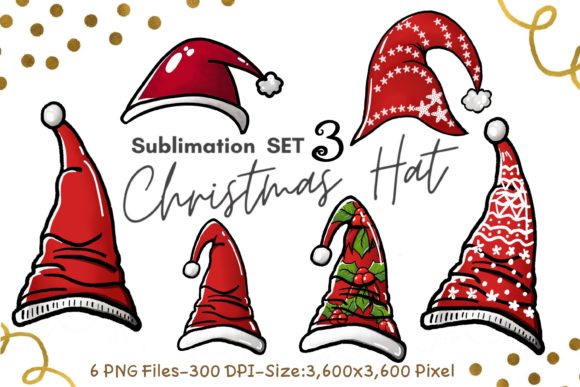
The visual personality of this set strikes a balance between whimsical and structured. The shapes are bold enough to hold their own, which is crucial when you are dealing with the limitations of thread thickness. In my line of work, delicate details often get lost in the stitching process, especially on textured fabrics. The Sublimation Set 3 Christmas Hat features clean outlines and distinct color blocking that suggests it would convert beautifully into a machine embroidery design. The layout feels intentional, avoiding unnecessary clutter that could lead to thread breaks or excessive jump stitches. For a designer looking to create a cohesive holiday collection, these elements offer a strong starting point for custom apparel or decorative home goods.
Real-World Application: The Holiday Tote Scenario
To truly test the viability of these assets, I imagined a specific real-life scenario: preparing a run of custom embroidered tote bags for a local boutique's holiday pop-up shop. Tote bags are notorious for having a slightly rougher weave than standard quilting cotton, which can make fine details look muddy. Using the hat motifs from this set as a base, I envisioned placing a large, central design on the front panel. Because the shapes in the Sublimation Set 3 Christmas Hat are relatively solid, they would likely perform well even on this challenging fabric texture.
If I were to digitize this for a sweatshirt embroidery project, the thick fleece material would require careful consideration of stitch density. The bold nature of these graphics means I wouldn't need to over-complicate the fill patterns. A simple satin stitch border around the main shapes could provide excellent definition, making the design pop against a dark heather grey or forest green garment. For customers browsing an Etsy seller's shop, that level of clarity translates directly to perceived value. They want a handmade product that looks professional, not something that appears fuzzy or poorly executed.
Navigating Fabric Challenges and Hoop Limitations
While the design holds promise, there are areas where caution is necessary. If you plan to use these graphics for baby embroidery on thin onesies, you must be mindful of the stitch count and density. Heavy stitching on stretchy, delicate fabric can cause puckering, ruining the drape of the garment. In this case, treating the Sublimation Set 3 Christmas Hat as an inspiration for a lighter running stitch or a sparse fill pattern might be smarter than attempting a dense solid fill.
Curved surfaces present another hurdle. Applying these designs to caps or hats requires a deep understanding of how the design distorts on a curved plane. The brim of a Christmas hat in the graphic might need to be shortened or widened slightly during the digitizing phase to compensate for the cap's curvature. Furthermore, if you are working with a small hoop size, you may need to isolate specific elements of the set rather than stitching the entire composition at once. Always check the dimensions of your largest element against your available hoop sizes before committing to a production run.
Critical Considerations for Commercial Use
For those running a craft business, consistency is key to building brand trust. The Sublimation Set 3 Christmas Hat offers a consistent style that can be applied across various products, from kitchen towels to pillow covers. However, before listing these as commercial embroidery projects, you must verify the licensing terms associated with the original graphics. Just because a file is available for download does not automatically grant rights for unlimited commercial resale of the stitched finished goods. Always read the fine print regarding design assets to ensure you are protected.
Another practical tip is to test your thread color choices rigorously. What looks vibrant on a backlit monitor might appear dull under shop lighting. I recommend stitching a sample on both light and dark fabric backgrounds. Sometimes, a design that works perfectly on white linen fails miserably on black twill due to a lack of contrast. Creating a printable mockup or a digital preview can help visualize this, but nothing beats a physical stitch-out. Check if the small details, like the pom-pom or trim on the hat, remain distinct or if they merge into a blob of thread.
Enhancing Product Value and Customer Engagement
Ultimately, the goal of using a resource like the Sublimation Set 3 Christmas Hat is to elevate the final product. When a customer receives a personalized gift featuring high-quality embroidery, it fosters loyalty and encourages repeat business. The clarity of the design affects the "giftability" of the item. A crisp, well-defined Christmas hat motif on a tea towel feels premium, whereas a blurry, poorly stitched version feels like a mistake. By carefully selecting the right stabilizer and optimizing the stitch path, you ensure that the finished product withstands frequent washing without losing its shape or color integrity.
In conclusion, while this set begins as digital Graphics, its true potential lies in the hands of a skilled maker who understands the nuances of thread and fabric. Whether you are creating an embroidered patch for a jacket or a full-back design for a holiday sweater, the Sublimation Set 3 Christmas Hat provides a solid thematic foundation. Just remember to respect the limitations of your materials, verify your commercial rights, and always, always stitch a test sample before cutting into your good fabric. That is the difference between a hobbyist experiment and a professional small shop product.