Sublimation Gnome Santa V17: A Designer's Take
As a designer who spends more time staring at stitch simulations than I do sleeping, I approach every new asset with a healthy dose of skepticism. We see thousands of files floating around the digital marketplace, labeled as Illustrations or Graphics, but very few translate well from a screen to a physical handmade product. When I first pulled up the Sublimation Gnome Santa V17, my initial reaction wasn't just about whether it was cute—it was about whether it could survive the rigors of a real-world embroidery project.
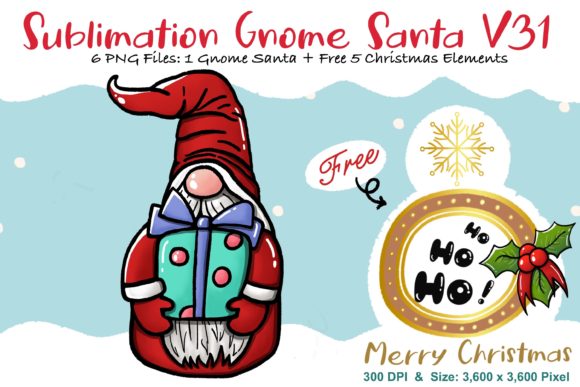
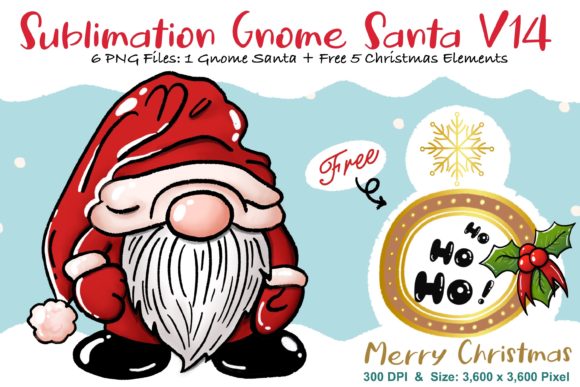
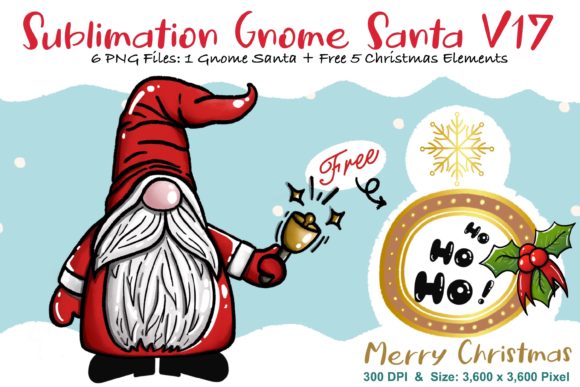
The first impression of Sublimation Gnome Santa V17 is one of whimsical warmth. The doodle style suggests a hand-drawn aesthetic that feels incredibly current for the holiday season. However, for us embroidery professionals, "cute" isn't enough. We need to know how those lines will behave when converted into satin stitch or fill stitch. The layout of this design features a classic gnome silhouette with that signature long beard and festive hat, but the linework has a specific weight to it that caught my eye immediately. It looks like it was intended for sublimation printing, which often means finer details and gradient-like shading that doesn't always play nice with thread.
From Screen to Stitch: Real-World Application
To truly test the viability of Sublimation Gnome Santa V17, I imagined a specific scenario that many of you face daily: a rush order for a local boutique needing custom sweatshirt embroidery for their holiday window display. The client wanted something that felt artisanal but modern. Using this design as a base for a digitized machine embroidery design offers some interesting possibilities, but it requires careful planning.
If you are considering using this graphic for a tote bag design, the bold outlines of the gnome could translate beautifully into a thick running stitch or a column stitch border. The character's personality shines through in the posture and the accessories, making it a strong candidate for personalized gift items like kitchen towels or aprons. However, because the source material is a sublimation-ready PNG, you aren't just popping in an embroidery file; you are likely using this as a reference to create your own stitches or perhaps combining it with a printed sublimation transfer on a garment that also features embroidered accents.
For Etsy sellers and craft business owners, the versatility of this image is its strongest asset. It fits perfectly into the niche of holiday embroidery without feeling overly traditional. Imagine this on a baby embroidery project, perhaps centered on a onesie or a nursery pillow cover. The soft, doodle-like quality appeals to parents looking for something gentler than the stark, blocky designs of the past. Yet, you must consider the finished product carefully. Will the details hold up after three washes? That is the question every professional must ask before selling a small shop product.
Navigating Fabric and Technical Challenges
Here is where we need to be brutally honest about the limitations of adapting Sublimation Gnome Santa V17 for stitching. Since this originates as a high-resolution graphic meant for heat transfer, directly digitizing it for embroidery requires a keen eye for stitch density. If you attempt to replicate every single line of the doodle style on a textured fabric like a waffle-knit towel or a fuzzy fleece sweatshirt, you risk losing definition.
Small hoop sizes present a significant challenge. If you are working on a cap or a small pocket, the intricate details of the gnome's face or the patterns on the hat might become a muddy mess of thread. In these cases, simplification is key. You may need to omit the tiniest internal details to ensure clarity. Furthermore, when working on stretchy fabrics or dark backgrounds, the contrast becomes critical. A light-colored gnome on a black hoodie needs robust underlay and potentially thicker satin columns to prevent the fabric from peeking through and ruining the illusion of the design.
Curved surfaces, such as baseball caps, are another area of caution. The flat nature of the original illustration means that without proper distortion correction during digitizing, the gnome's beard could look warped once stitched onto a curved crown. For commercial embroidery projects where consistency is paramount, I strongly advise running a test on scrap fabric that matches your final material. Do not skip this step. Check how the thread colors interact with the fabric texture. A color that pops on a white cotton tee might vanish against a heather grey blend.
Enhancing Brand Value and Customer Trust
The decision to use a specific design asset like Sublimation Gnome Santa V17 goes beyond aesthetics; it impacts your brand perception. Customers today are savvy. They can tell the difference between a lazy print-and-go job and a thoughtfully executed piece. When you take a digital graphic and adapt it with care—choosing the right stabilizer, selecting high-sheen threads, and ensuring clean trim—you elevate the perceived value of the item.
This design has the potential to boost buyer engagement because it taps into the popular "gnome" trend while offering a fresh, Santa-themed twist. For digital product sellers who might offer this as part of a bundle, providing guidance on how to best use it for both sublimation and embroidery adds immense value. It shows that you understand the maker's journey. For those creating printable mockup files, this graphic provides excellent visual appeal, but remember to clarify to your buyers whether the file is intended for print-only or if it includes vector paths suitable for stitching.
Practical Notes for the Professional Maker
Before you commit to producing a run of products featuring Sublimation Gnome Santa V17, here are a few non-negotiable steps I recommend:
- Test on Scrap First: Always stitch out a sample on the exact fabric you intend to sell. What looks good on muslin might pucker on twill.
- Check Contrast: View your design in black and white. If the details disappear in grayscale, they will likely get lost in the stitching too.
- Review Density: If digitizing this yourself, keep stitch counts reasonable. Over-densing a doodle style kills its charm and makes the fabric stiff.
- Verify Licensing: This is crucial for commercial embroidery. Ensure the license for Sublimation Gnome Santa V17 allows for use in physical goods you intend to sell. Some graphics are for personal use only.
- Consider the Hoop: Confirm that the design fits comfortably within your available hoop size without requiring excessive re-hooping, which can lead to alignment issues.
In conclusion, Sublimation Gnome Santa V17 is a charming piece of Illustrations art that holds great promise for the holiday season. However, its success lies entirely in the execution. As designers, our job is to bridge the gap between a digital Graphics file and a tactile, durable treasure. By respecting the limitations of thread and fabric, and by approaching this design with a strategist's mind, you can turn a simple PNG into a standout star of your holiday collection. Whether it ends up on a cozy blanket or a trendy tote, the potential is there—it just needs your expert touch to shine.