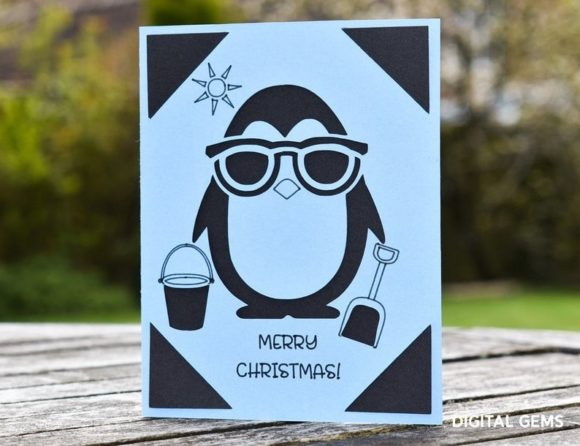
Penguin Christmas Card: A Designer's Review for Holiday Embroidery
As a designer who spends more time staring at stitch maps than most people spend looking at actual art, I approach every new machine embroidery design with a mix of excitement and skepticism. We've all been there: a file looks adorable on the screen, but once it hits the hoop, the details muddy, the density creates puckering, or the theme feels too generic for a discerning customer. Today, I'm taking a close look at the Penguin Christmas Card. This isn't just a quick glance at a thumbnail; this is an evaluation of how this digital artwork translates into a tangible, stitched reality for craft businesses and handmade shops.
The first thing that strikes me about the Penguin Christmas Card is its mood. In a sea of traditional red-and-green Santa motifs, a penguin offers a refreshing, whimsical alternative. It immediately signals "holiday" without screaming "cliché." For those of us living in warmer climates, or for the growing market of "Christmas in July" enthusiasts, this design hits a sweet spot. It feels playful yet polished, making it a versatile asset for anyone looking to expand their holiday embroidery catalog beyond the standard reindeer and snowflakes.
Visual Personality and Stitch Potential
When evaluating a digital embroidery file, I always ask: does the layout work for the needle? The Penguin Christmas Card appears to have a strong central focus, which is crucial for readability. In embroidery, less is often more. If a design tries to do too much with tiny running stitch details in small areas, it can vanish into the fabric texture. From what I can see in the preview, this design balances open space with defined shapes well. The character of the penguin suggests a friendly demeanor, which translates perfectly into consumer goods where emotional connection drives sales.
The visual personality here leans towards the cute and approachable. This makes it an ideal candidate for baby embroidery projects. Imagine this stitched onto a soft muslin onesie or a nursery pillow cover. The simplicity of the subject matter allows the thread colors to pop without overwhelming the viewer. However, as a reviewer, I have to consider the technical execution. Does the design rely heavily on satin stitch for the outlines, or does it use fill stitch for the body? Satin stitches offer a premium, shiny look that customers love on custom apparel, but they require precise tension. Fill stitches are more durable for items like tote bag designs that will see heavy use. Without seeing the actual stitch map, my advice is to assume a mix and test accordingly.
Real-World Application Scenarios
Let's get practical. Where does the Penguin Christmas Card actually shine in a real business setting? I recently worked on a collection for a boutique client who wanted to avoid the "big box store" holiday vibe. They needed something unique for their small shop product line. This design would have been perfect for their linen tea towels. Linen has a distinct weave, and a design with clear definition, like this penguin, stands up beautifully against that fabric texture.
Another strong use case is sweatshirt embroidery. Fleece and French terry are thick, lofty fabrics. A design with good coverage and not too many microscopic details works best here. The Penguin Christmas Card seems robust enough to sit on a chest pocket or the center of a crewneck without getting lost in the nap of the fabric. For Etsy sellers, this opens up opportunities for personalized gifts. Adding a name underneath the penguin in a complementary font could turn a simple graphic into a high-value personalized gift.
I also see potential for embroidered patches. If the design files allow for a merrowed edge or a clean cut-line, this penguin could be mass-produced as an iron-on patch. Patches are a huge trend in the craft business sector right now, offering a low-risk way for customers to try a brand's aesthetic. Furthermore, for those creating printable mockups to sell as design assets, this image serves as a charming focal point for digital planners or greeting cards, bridging the gap between physical stitching and digital Graphics.
Navigating Technical Challenges
No design is without its challenges, and honest review means addressing where things might go wrong. If you are planning to stitch the Penguin Christmas Card on dark fabric, pay close attention to the color palette. If the penguin is black or dark blue, it will disappear on a navy sweatshirt. You may need to manually adjust the thread chart in your software to ensure sufficient contrast. Similarly, be wary of stitch density. If the fill areas are too dense, they can cause the fabric to pucker, especially on stretchy materials like t-shirt jersey or thin baby knits.
Curved surfaces present another hurdle. If you intend to put this on a cap, remember that the front panel is curved. Designs that are too wide or have intricate corners can distort when stitched on a curve. The Penguin Christmas Card looks relatively compact, which is good, but always hooping a test piece on a similar curved surface is non-negotiable. Also, consider the hoop size. If the design is large, ensure your machine can handle the required area, or be prepared to split the design if necessary, though splitting is rarely ideal for a cohesive character illustration.
Washability is the final frontier. A finished product that falls apart after one wash destroys customer trust. Ensure you are using the correct stabilizer. For towels and aprons, a cut-away stabilizer is usually best to support the stitches over time. For wearables, a tear-away might suffice if the density is low, but don't gamble on it. Always inspect small details like the eyes or beak; these tiny elements are the first to pull out if the underlay isn't sufficient.
Final Verdict for Creative Entrepreneurs
The Penguin Christmas Card holds significant promise for commercial embroidery projects. It taps into the desire for non-traditional holiday decor while maintaining a festive spirit. Its strength lies in its versatility—it fits equally well on a kitchen towel, a toddler's bib, or a tote bag. For apparel decorators and handmade product creators, it offers a fresh narrative that stands out in crowded marketplaces.
However, success depends on preparation. Do not skip the step of testing the design on scrap fabric that matches your final material. Check the thread color contrast rigorously. Verify the licensing terms provided with the digital artwork to ensure you are compliant for commercial sales, especially if you are an Etsy seller planning to sell thousands of units. While the product description mentions it is perfect for hot weather Christmases, its appeal is truly year-round for the right niche.
In the world of Crafts, perception is reality. If your stitching looks crisp and the design choice feels intentional, your brand value increases. The Penguin Christmas Card provides that intentionality. It tells a story of fun, warmth, and a slightly different take on the season. Just remember, the file is only half the battle; your skill in hooping, stabilizing, and thread selection turns this embroidery project into a profitable reality. Before you commit to a large run, stitch one sample, wash it, dry it, and then decide if it meets your standards for quality. That is the mark of a true professional.